Click on Gallery A for seeing the collection of painting, drawing, sculpture and mixed media, on Gallery B for video art, photography and design and onMeet The Artistsfor getting to know our artists.
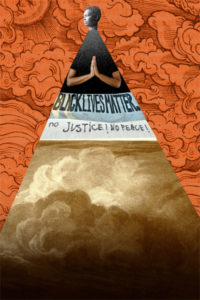
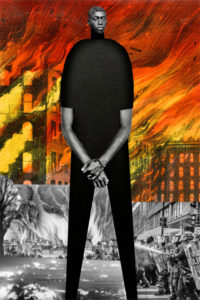
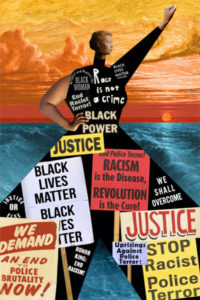
Execution of George Floyd on May 25, 2020 in the middle of the day and in front of the whole world was one of the clearest evidence of racism and brutality based on color, in 21 century. We clearly saw that human beings are still being tortured and killed for what they are and they didn’t choose themselves, it was such a shock for the humanity for the simple fact that it was captured on cameras.
Discrimination is utterly ugly and wrong but clearly on paper because in reality people are still being targets of it in any form. We hope that in time human beings and mostly political systems reach to an understanding of how to stop this violence, but until then at Matigan as always we tend to translate the common universal feelings through art and the heart of our artists.
Sylvain Souklaye is a French performance and installation artist obsessed with sampling.intimacies about people who don’t belong to a determinate identity, gender, class, colour or nationality.
”More”
His performances are a collage of individual memories which are relived for the audience. Self-taught, he began performing with vandalism in Lyon (France) and then intimate happenings, radio experimentation and action poetry. He later developed digital art installations using field recording techniques as a narrative layer while pursuing his writer’s path. Among his best known pieces are la blackline, a five-year durational radio performance about socioeconomic survival and urban absurdity, le déserteur a digital art installation dwelling on the notion of abandonment, TME a docudrama performance exploring self-inflicted amnesia and resilience and Migrant Market a remake of the slave market updated for the uber economy. Sylvain Souklaye’s methods characteristically involve intense physical acts as well as the use of unsettling intimacy.
Barry Despenza: You will find that his work is centered on power structures that underlie the perception of what it means to be visually stimulated. He uses soundscapes as a canvas while video is used as the brush to complete the piece.By removing all aesthetic differences and exposing the viewer he creates a spectacle curated by human experience.
”More”
This is successful by expanding on his auditory lens to include samples, found footage and original compositions through the use of DAW and moving images. He is able to morph sound and music together to a larger concealed language in which we associate with memory, textures and storytelling with a heavy emphasis on experimental techniques.
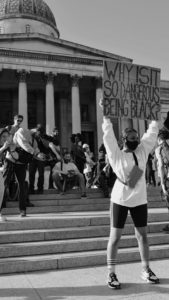
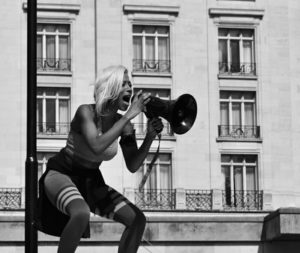
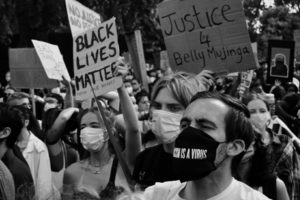
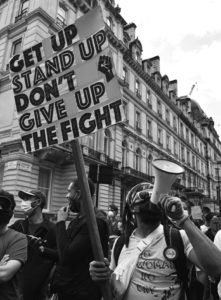
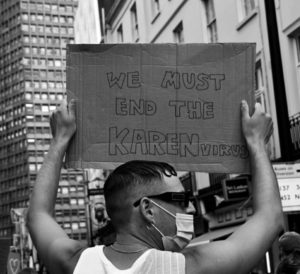
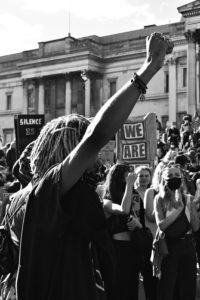
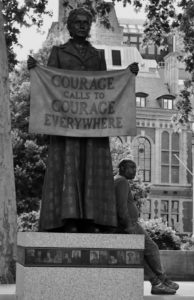
Alice Mason is an emerging urban photographer with a strong focus on documenting everyday moments, from protests to commutes. Having studied film at university she has experimented with different mediums before finding a passion for photography.
”More”
Believing there is great beauty to be found in everyday life, none of her photos are staged and instead capture organic scenes of life in the capital. With the majority of her photography being in black and white she pays a lot of attention to light and shade and the roles they play in creating powerful images.
Maundy Mitchell is an internationally acclaimed portrait photographer and Associate Level Photographer with The Portrait Masters International. She runs her portrait studio, Maundy Mitchell Photography, in Plymouth, NH.
”More”
Her photos have been published in magazines, on billboards, and online nationally and internationally. She is a member of the Professional Photographer’s Association of America, the National Association of Professional Child Photographers, the Magic Hour Foundation Photographer Network, and the Women’s Caucus for Art in New Hampshire. She holds a trademark on the phrase, “People are Beautiful”, which is her core belief as a photographer.
Tzen Xing is a Chinese American woman photographer and an activist who got born in 1968, who has been involved in the struggle for justice and equality for many years. She is thankful whenever she has the opportunities to combine her activism and photography, like the Black Lives Matter protests this year. She is mainly a self-taught street photographer.
”More”
The streets and people are the source of her learning and inspiration. She loves to travel, and hope to do more traveling when the pandemic is over.
Antonis Tsarouchas is 26 years old and he is from Greece, living in Germany. About Black Lives matter movement he said: “I can relate to this subject, cause living as a migrant, your friends your cycle are people like me. Black or White, doesn’t matter, the society see you like a tool, like a number. But we are Dreamers and we want what everyone has Peace.
Iris H.J. Houkes is an artist from Netherlands. From her background as a graphic designer, she strives to find a certain balance between a conceptual idea and the typographic translation of this idea. She finds her inspiration within the ‘current zeitgeist’ in which everything she sees, reads or hears can be a source of inspiration which she converts into a graphic translation. Either on print, canvas or textile. In 2016 she started the label ‘wonderful’ which offers sustainable & fairly made t-shirts and sweaters with prints. Prints to trigger us to think. About what we wear, what we do and what choices we make. Not always in our face, but always with a subtle ethical or political message.
Marieke Vreeken is a dutch Human rights lawyer and humanitarian advocate living in Belgium these days. Her deeply rooted desire to fight injustice and advocate for those in need has taken her around the world, from grassroots human rights protests in Uganda to the United Nations Head quarters in New York. She have 7+ years of experience in advocacy, multilateral diplomacy and legal research. Her areas of expertise include human rights, rule of law strengthening humanitarian aid and animal welfare.
New York-based Artist, Johanna Goodman studied at Boston University’s School of Fine Art (Boston) and Parsons School of Design (NYC) where she graduated with a Bachelor of Fine Arts in Illustration in 1992. She has been a freelance Illustrator ever since. Her work has garnered awards from The Society of Publication Design, American Illustration, and Communication Arts.
”More”
Clients include: The Metropolitan Transit Authority of New York, The Museum of Natural History, The Rock & Roll Hall of Fame,The Sidney Hillman Foundation, The Paley Center for Media, West Elm, truTV, Time Magazine, Rolling Stone, Le Monde, The New York Times, The Wall Street Journal, The Washington Post, The Los Angeles Times, The New Yorker, New York Magazine, Entertainment Weekly, Bust Magazine, Smithsonian Magazine and The Progressive among many others.
Antonius Kho was born in Klaten, Java and later pursued his artistic study in Cologne, Germany. He chooses mask as his subject matter and explores it to the full. The result is array of masks that never represent anyone, or for that matter, anything. The mask is in his paintings. The mask has shed its from original intentions, replaced by his own personal reflections.
”More”
It lost its intended functions as cover for someone or symbol of something. Masks are utilized as the seed for his creativity, as a visual concept before he takes up the brush. Even when Kho could presents Petruk (a Javanese puppet character), he delves deeper into the mask’s basic existence, never Petruk at its face-value. While the mask is not seen as who anymore. Kho”s explorations on masks has reached into its darkest nock and crannies. Every mask he finds, approaches and then explores accumulated into a creation. A million mask drops from his brush. Only the essence spreads over his canvas. “Masks in my hand is power. A magistrate”, he said once The fact that mask are able to penetrate Kho’s basest fantasy and imagination is heavily influenced by its diversity, ubiquitous and historical complexity. Indonesia proved to be a fertile ground for him for her extraordinarily rich heritage of masks. Thousands of mask has been created for a multitudinous of functions everywhere, from west Sumatra through to Irian Jaya east, since the beginning of time. And yes, this challenges Kho to always create unique works. Which is his.
Roman Senapati (Bikash Chandra Senapati ) was born in India in 1988, He completed his art educations MFA In graphics from IndIra Kala SangeetVishwavidyalaya, Khairagarh,Chhattisgarh and BFA from Karnataka ChitrakalaParishath, Bangalore specialized in painting. He has attended several exhibitions internationally and won many awards.
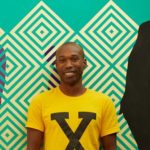
Ver Ikeseh has over ten years of experience as a practicing visual artist. He earned a Bachelor of Art in Fine Arts from Ahmadu Bello University, Zaria Nigeria. He also has two art related Master Degrees from the University of Ibadan, Ibadan Nigeria and Leiden University, Leiden the Netherlands.
”More”
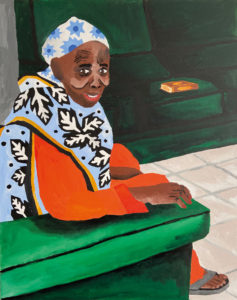
He uses African fabrics to create paintings on canvas which he has exhibited in Nigeria, the Netherlands and the UK. His undergraduate thesis was an analysis of the wall murals within the Ahmadu Bello University, Zaria. This and his subsequent research on murals have continued to propel his passion to impact lives and minds by transforming dilapidated structures in slums with his colorful murals. Recently, he launched the “I Can 100 Project” where he aims at painting murals in 100 communities across Africa. He has currently painted some communities in Nigeria and Ghana, and is working tirelessly to meet this target in 2 years. This campaign earned him a spot as one of the 25 AYADA Lab 2019 finalists which is supported by Goethe Institute, Alliance Français and iSpace Ghana. Currently, he paints mural commissions, and the proceeds are used to fund his “I Can 100” community mural project.
Jean René Leblanc is an Associate Professor of Digital Arts at the University of Calgary in Canada. He is president of the board of Emmedia Gallery and Production Society and co-founder of the Sensorium Lab a cross-disciplinary research group focusing on research that develops systems of interaction that encourage kinaesthetic perception and interpretation.
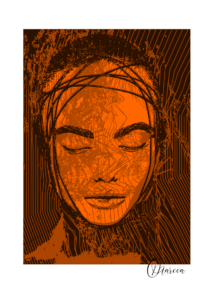
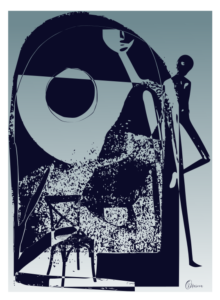
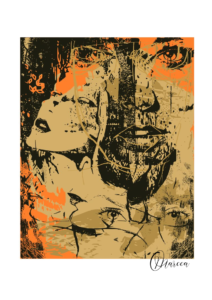
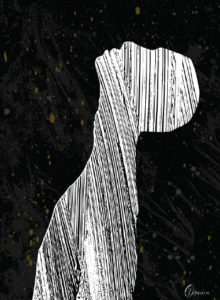
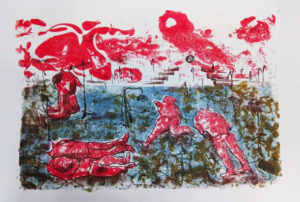
Omarcca is a self-taught visual artist, serigraphic printer, he seeks in his art to mix concepts and subjectivity, and with the readings of his reflective traces and poetic propositions, He constructs the images proposed in an expressionist way. In my work, drawing is not a mere creative laboratory or process, in reality it is art itself.He develops with paper and paints, artistic prints, where he pours his dreams, expectations and social criticisms, in this way he approaches the complex and playful themes of each of my works with the public.
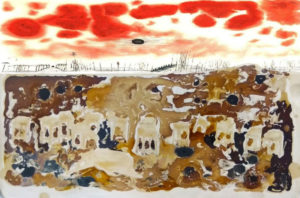
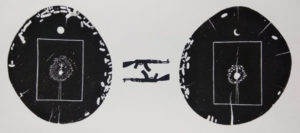
Iranian born Artist Hosna Karnama graduated with a Masters in visual art / The subject matter of her works are inspired by war with a focus on mythical features and an insider’s view of the role of war in her life / Her expression of conflict.
tension and pain aims to convey the constant battle of good and evil / She believes the real war happens inside our hearts and minds/ She is working on two series of paintings highlighting the conflict between the calligraphy, mythological content of Shahnameh and Gilgamesh and the other one is the contrast between contemporary art and Iranian calligraphy.
Suleyman-Wellings-Longmore is an Caribbean and African based in Paris and Berlin.The colour black connotes both presence and absence, before and after: existence and non-existence. Extrapolating this paradox to race, we arrive at a nuance of Black identity – being simultaneously invisible and conspicuous to the world around you.
”More”
By manipulating the texture and depth of paintings and sculptures, this abstract figurative series explores the relationship between Black identity and congruence with, or resistance against, one’s environment, and the values and expectations that such surroundings impose: B[L]ackground.
Seeking to redress an imbalance of diversity in art whilst also inspired by the series’ core issues, Suleyman has drawn upon his own experiences as a man of Caribbean and African heritage to examine the central themes of race, selfhood, fatalism, and self-fulfillment in the context of gender, sexuality, and parenthood. Reflections on race relations and racial identity in the aftermath of George Floyd’s death and the heightened focus on anti-Black racism have also inspired his recent pieces.
Swarup Manna is an Indian artist who got born in 1996. He believes that In Current time people forget to raise their voice against depravity. So in this series of work he wanted to focus on the people who are unable to voice the protest against depravity, which leads to arise some questions but that is no use as the mouth is stitched by the needle of uncertainty.
Soimadou Ali Ibrahim (French, b. 1989) explores and re-examines family memories by representing cherished moments of life in Itsinkoudi, a remote village in Ngazidja the biggest island of the Comoros archipelago, where Ibrahim’s grand mother and most of his family still live.
”More”
Growing up in Comoros until 10 years old influenced his perspective on socioeconomic, the strength of community and the complexities of race, and has triggered Ibrahim to question his own Frenchness in relation to the island’s colonial past. These artworks are adapted from archival photographs, pictures taken by the artist himself, memories, and imagination. They each portray the importance of family, of life itself and hope, illustrated by straight lines, bold gestural strokes and bright colors inspired by his studies in graphic design and art. In essence, Ibrahim uses the practice of painting as a way to reconnect and engage with his roots. Ibrahim currently resides in London but from the age of 10 and throughout his adolescent life he lived in a small town in Brittany, France. It is not only his personal experiences but also those of the African diaspora that provide him with a narrative to share and explore how it is to be black and navigate the environment you are in.
Kate Bortsova is a visual artist who believes: I think that art means confrontation between life and aesthetics. It is a hard struggle for both of them. Ant the understanding of art is one of the main artist’s working specialties.
I as an artist believe that keeping up with ephemera fashion shall not serve as a factor of art work modernity. Let me remind you that the way of human civilization development has a form of curl. Everything new is a well-forgotten old but at the new curve of civilization.
”More”
A statement that human shall study and develop oneself for a whole life impresses me very much. I consider that a talented person is obliged to find out something new throughout its life, to reach new more tops. If it ceases to develop oneself it will have nothing more to say to the audience by means of its works. At the present moment I am expanding my conception of the theoretical aspect of art and therefore I harmonize all the aspects of the talented person of mine.
Throughout the whole life a talented person shall pass a difficult and even a suffering way which may be related either to external events or to comprehension of the individual self. An artist creates its own image of the world and therefore it correlates its imaginations with the common laws of universe. We know that each way shall lead to the temple but the temple may be erected inside the human’s soul.
When I work I do not think whether someone will like my work and will buy it. I get delighted by the process itself, by the stages of creating a picture, by the way of implementation of my virtual idea. I cannot detach any certain image of the admirer of my works. I think everyone may find something close thereto among my works.
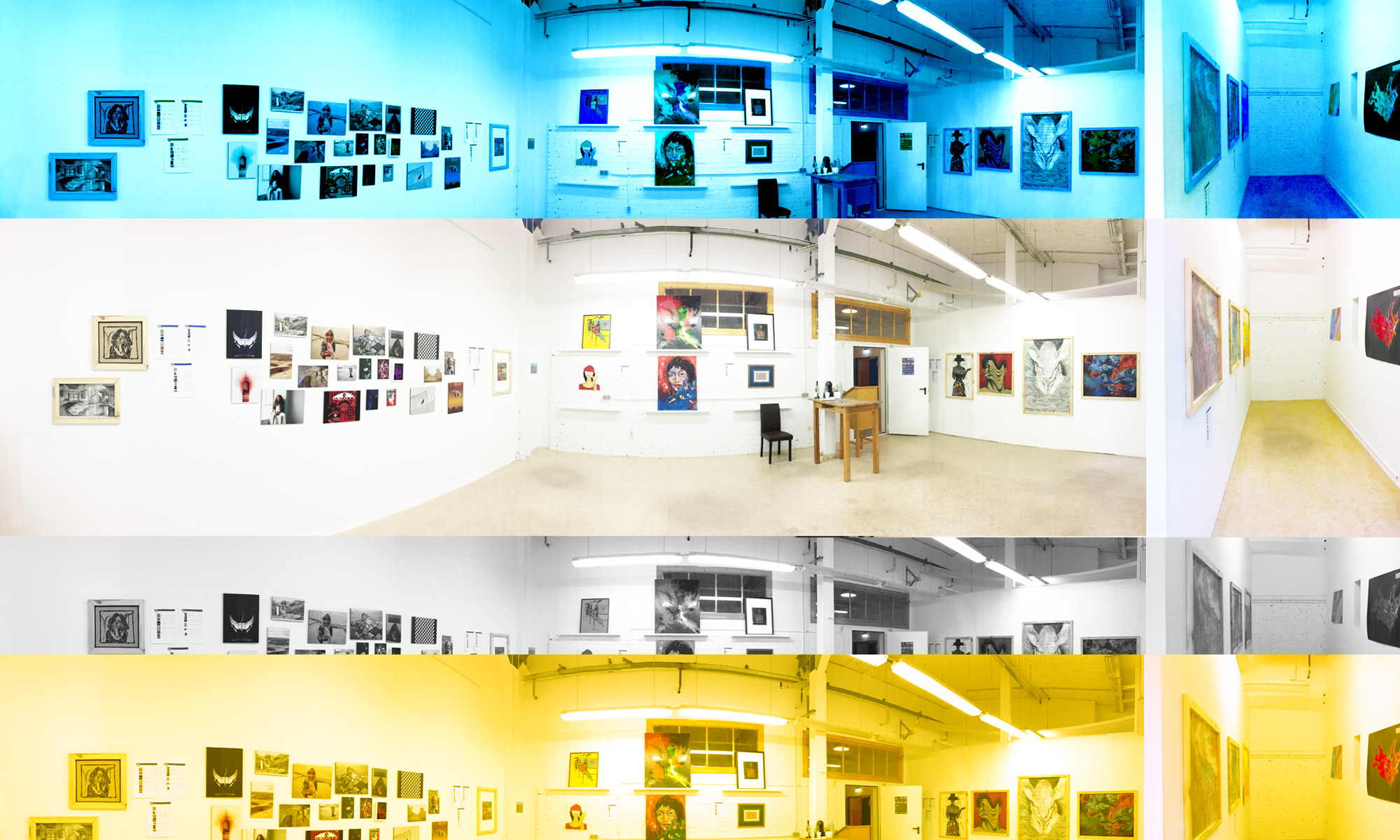
This is Gallery A where you can see the collection of painting, drawing, sculpture and mixed media. Click on Gallery B for video art, photography and design and on Meet The Artists for getting to know our artists.
Execution of George Floyd on May 25, 2020 in the middle of the day and in front of the whole world was one of the clearest evidence of racism and brutality based on color, in 21 century. We clearly saw that human beings are still being tortured and killed for what they are and they didn’t choose themselves, it was such a shock for the humanity for the simple fact that it was captured on cameras.
Discrimination is utterly ugly and wrong but clearly on paper because in reality people are still being targets of it in any form. We hope that in time human beings and mostly political systems reach to an understanding of how to stop this violence, but until then at Matigan as always we tend to translate the common universal feelings through art and the heart of our artists.
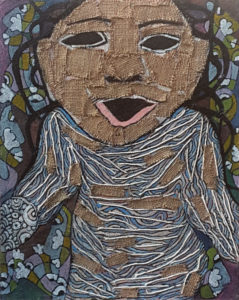
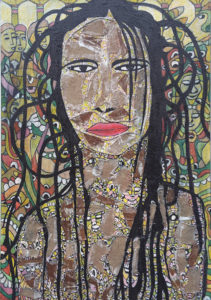
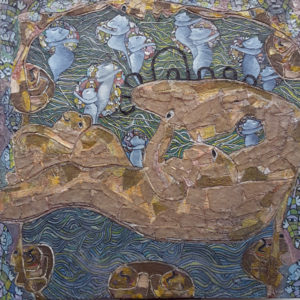
My works, like my culture, are mosaic: they consist of vignettes of tropical and earth tones scattered across the canvas in an obsession patterning of human figures and masks.
”More”
When looking at it, though, it is impossible to focus on these individual patterns or sub-patterns, one’s attention is drawn away, made to run from one color surface to the other. dance across the canvas from one tone to the other. until this visual search identification signs: eyes. Eyes lurk everywhere in my works, “They are the ultimate presence or truth” , therefore the life behind the mask-and, from an aesthetic point of view. The vibrant of earth tones of my native Java find life and substance in carefully structured compositions. My seeks to resolve the fluid, graceful, mutable philosophy of Indonesia with solid, reasonable, almost cubist forms. These rich and various forms are rendered in slashing, vigorous strokes, with generous application of tropical colors. My paintings are figurative while having the formal qualities of abstraction. They can thus be interpreted at both levels, without the one interfering on the other. One may let oneself be either haunted by the weird presence of the “eyes” and masks or entranced by the hypnotic quality of the color patterns.
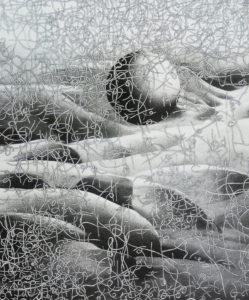
Title : The broken lines Medium -pen on paper Size -30x22inch
This drawing is little different than my usual works. I did this work to cherish those little moments and experiences. In this I have used the small broken lines. These lines represent the small experiences or moments in our life that unknowingly help us to achieve our goal. These little broken lines which we ignore, hold the true value in our life. The circle represents the goal.
”More”
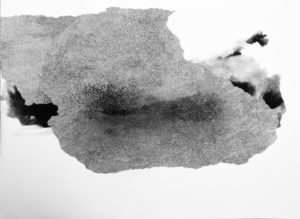
Title: Desire Medium:- Pen on paper. Size:- 22X30 inch
This work abstract representations of the dreams, desires or goals of an individual. Some dreams are realized in our life, some are in the progress of the realization, and some of them, we have to bury deep down because of the unfavorable circumstances or for the sake of our loved ones. In this work, I have used only the lines,circles to represent our desire.
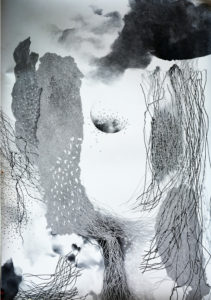
Title: Purgatory Medium:- Pen on paper. Size:- 60x42inch
This work is to depict the state of purgatory which we are heading towards due to our growing concrete jungle. In this work I have given much more depth which normally I don’t do just to show the destruction. The semicircle in the middle represent the moon,to emphasize the fact that, We are trying to find life on moon, but we are ignoring the trouble which we are causing to nature. We are ignoring the beauty of our nature on earth. The ladder like forms on the right represent our urbanization or our growing concrete jungle which is slowly ruining our mother nature.
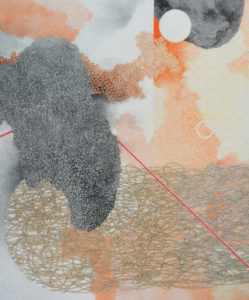
Title: Ultimatum Line Medium -pen on paper Size -30x22inch
This work is related to our very own nature. Nature is beautiful in its own way. We are no one to interfere in it. Every form in my work is inspired from nature, it is an inevitable part of my work. The problem is, we are causing a lot trouble to the nature. For our own greed, we are misusing the resources. We are taking it for granted. That red line in my work is the ultimatum line, if we cross that line, we will have to pay for it.
Sylvain Souklaye is a French performance and installation artist obsessed with sampling.intimacies about people who don’t belong to a determinate identity, gender, class, colour or nationality.
”More”
His performances are a collage of individual memories which are relived for the audience. Self-taught, he began performing with vandalism in Lyon (France) and then intimate happenings, radio experimentation and action poetry. He later developed digital art installations using field recording techniques as a narrative layer while pursuing his writer’s path. Among his best known pieces are la blackline, a five-year durational radio performance about socioeconomic survival and urban absurdity, le déserteur a digital art installation dwelling on the notion of abandonment, TME a docudrama performance exploring self-inflicted amnesia and resilience and Migrant Market a remake of the slave market updated for the uber economy. Sylvain Souklaye’s methods characteristically involve intense physical acts as well as the use of unsettling intimacy.
”Less”
Barry Despenza: You will find that his work is centered on power structures that underlie the perception of what it means to be visually stimulated. He uses soundscapes as a canvas while video is used as the brush to complete the piece.By removing all aesthetic differences and exposing the viewer he creates a spectacle curated by human experience.
”More”
This is successful by expanding on his auditory lens to include samples, found footage and original compositions through the use of DAW and moving images. He is able to morph sound and music together to a larger concealed language in which we associate with memory, textures and storytelling with a heavy emphasis on experimental techniques.
”Less”
Artist: Alice Mason is an emerging urban photographer with a strong focus on documenting everyday moments, from protests to commutes. Having studied film at university she has experimented with different mediums before finding a passion for photography.
”More”
Believing there is great beauty to be found in everyday life, none of her photos are staged and instead capture organic scenes of life in the capital. With the majority of her photography being in black and white she pays a lot of attention to light and shade and the roles they play in creating powerful images.
”Less”
Maundy Mitchell is an internationally acclaimed portrait photographer and Associate Level Photographer with The Portrait Masters International. She runs her portrait studio, Maundy Mitchell Photography, in Plymouth, NH.
”More”
Her photos have been published in magazines, on billboards, and online nationally and internationally. She is a member of the Professional Photographer’s Association of America, the National Association of Professional Child Photographers, the Magic Hour Foundation Photographer Network, and the Women’s Caucus for Art in New Hampshire. She holds a trademark on the phrase, “People are Beautiful”, which is her core belief as a photographer.
”Less”
Jota Ramos is born in 1989 , Jota is a black queer artist from Brazil currently living in Berlin.
Tzen Xing is a Chinese American woman photographer and an activist who got born in 1968, who has been involved in the struggle for justice and equality for many years. She is thankful whenever she has the opportunities to combine her activism and photography, like the Black Lives Matter protests this year. She is mainly a self-taught street photographer.
”More”
The streets and people are the source of her learning and inspiration. She loves to travel, and hope to do more traveling when the pandemic is over.
”Less”
Antonis Tsarouchas is 26 years old and he is from Greece, living in Germany. About Black Lives matter movement he said: “I can relate to this subject, cause living as a migrant, your friends your cycle are people like me. Black or White, doesn’t matter, the society see you like a tool, like a number. But we are Dreamers and we want what everyone has. Peace.
New York-based Artist, Johanna Goodman studied at Boston University’s School of Fine Art (Boston) and Parsons School of Design (NYC) where she graduated with a Bachelor of Fine Arts in Illustration in 1992. She has been a freelance Illustrator ever since. Her work has garnered awards from The Society of Publication Design, American Illustration, and Communication Arts.
”More”
Clients include: The Metropolitan Transit Authority of New York, The Museum of Natural History, The Rock & Roll Hall of Fame,The Sidney Hillman Foundation, The Paley Center for Media, West Elm, truTV, Time Magazine, Rolling Stone, Le Monde, The New York Times, The Wall Street Journal, The Washington Post, The Los Angeles Times, The New Yorker, New York Magazine, Entertainment Weekly, Bust Magazine, Smithsonian Magazine and The Progressive among many others.
”Less”
Antonius Kho was born in Klaten, Java and later pursued his artistic study in Cologne, Germany. He chooses mask as his subject matter and explores it to the full. The result is array of masks that never represent anyone, or for that matter, anything. The mask is in his paintings. The mask has shed its from original intentions, replaced by his own personal reflections.
”More”
It lost its intended functions as cover for someone or symbol of something. Masks are utilized as the seed for his creativity, as a visual concept before he takes up the brush. Even when Kho could presents Petruk (a Javanese puppet character), he delves deeper into the mask’s basic existence, never Petruk at its face-value. While the mask is not seen as who anymore. Kho”s explorations on masks has reached into its darkest nock and crannies. Every mask he finds, approaches and then explores accumulated into a creation. A million mask drops from his brush. Only the essence spreads over his canvas. “Masks in my hand is power. A magistrate”, he said once The fact that mask are able to penetrate Kho’s basest fantasy and imagination is heavily influenced by its diversity, ubiquitous and historical complexity. Indonesia proved to be a fertile ground for him for her extraordinarily rich heritage of masks. Thousands of mask has been created for a multitudinous of functions everywhere, from west Sumatra through to Irian Jaya east, since the beginning of time. And yes, this challenges Kho to always create unique works. Which is his.
”Less”
Roman Senapati (Bikash Chandra Senapati ) was born in India in 1988, He completed his art educations MFA In graphics from IndIra Kala SangeetVishwavidyalaya, Khairagarh,Chhattisgarh and BFA from Karnataka ChitrakalaParishath, Bangalore specialized in painting. He has attended several exhibitions internationally and won many awards.
Ver Ikeseh has over ten years of experience as a practicing visual artist. He earned a Bachelor of Art in Fine Arts from Ahmadu Bello University, Zaria Nigeria. He also has two art related Master Degrees from the University of Ibadan, Ibadan Nigeria and Leiden University, Leiden the Netherlands.
”More”
He uses African fabrics to create paintings on canvas which he has exhibited in Nigeria, the Netherlands and the UK. His undergraduate thesis was an analysis of the wall murals within the Ahmadu Bello University, Zaria. This and his subsequent research on murals have continued to propel his passion to impact lives and minds by transforming dilapidated structures in slums with his colorful murals. Recently, he launched the “I Can 100 Project” where he aims at painting murals in 100 communities across Africa. He has currently painted some communities in Nigeria and Ghana, and is working tirelessly to meet this target in 2 years. This campaign earned him a spot as one of the 25 AYADA Lab 2019 finalists which is supported by Goethe Institute, Alliance Français and iSpace Ghana. Currently, he paints mural commissions, and the proceeds are used to fund his “I Can 100” community mural project.
”Less”
Jean-René Leblanc is an Associate Professor of Digital Arts at the University of Calgary in Canada. He is president of the board of Emmedia Gallery and Production Society and co-founder of the Sensorium Lab a cross-disciplinary research group focusing on research that develops systems of interaction that encourage kinaesthetic perception and interpretation.
Omarcca is a self-taught visual artist, serigraphic printer, he seeks in his art to mix concepts and subjectivity, and with the readings of his reflective traces and poetic propositions, He constructs the images proposed in an expressionist way. In my work, drawing is not a mere creative laboratory or process, in reality it is art itself.He develops with paper and paints, artistic prints, where he pours his dreams, expectations and social criticisms, in this way he approaches the complex and playful themes of each of my works with the public.
Iranian born Artist Hosna graduated with a Masters in visual art / The subject matter of her works are inspired by war with a focus on mythical features and an insider’s view of the role of war in her life / Her expression of conflict.
tension and pain aims to convey the constant battle of good and evil / She believes the real war happens inside our hearts and minds/ She is working on two series of paintings highlighting the conflict between the calligraphy, mythological content of Shahnameh and Gilgamesh and the other one is the contrast between contemporary art and Iranian calligraphy.
Wellings-Longmore, Suleyman is an Caribbean and African based in Paris and Berlin.The colour black connotes both presence and absence, before and after: existence and non-existence. Extrapolating this paradox to race, we arrive at a nuance of Black identity – being simultaneously invisible and conspicuous to the world around you.
”More”
By manipulating the texture and depth of paintings and sculptures, this abstract figurative series explores the relationship between Black identity and congruence with, or resistance against, one’s environment, and the values and expectations that such surroundings impose: B[L]ackground.
Seeking to redress an imbalance of diversity in art whilst also inspired by the series’ core issues, Suleyman has drawn upon his own experiences as a man of Caribbean and African heritage to examine the central themes of race, selfhood, fatalism, and self-fulfillment in the context of gender, sexuality, and parenthood. Reflections on race relations and racial identity in the aftermath of George Floyd’s death and the heightened focus on anti-Black racism have also inspired his recent pieces.
”Less”
Swarup Manna is an Indian artist who got born in 1996. He believes that In Current time people forget to raise their voice against depravity. So in this series of work he wanted to focus on the people who are unable to voice the protest against depravity, which leads to arise some questions but that is no use as the mouth is stitched by the needle of uncertainty.
Soimadou Ali Ibrahim (French, b. 1989) explores and re-examines family memories by representing cherished moments of life in Itsinkoudi, a remote village in Ngazidja the biggest island of the Comoros archipelago, where Ibrahim’s grand mother and most of his family still live.
”More”
Growing up in Comoros until 10 years old influenced his perspective on socioeconomic, the strength of community and the complexities of race, and has triggered Ibrahim to question his own Frenchness in relation to the island’s colonial past. These artworks are adapted from archival photographs, pictures taken by the artist himself, memories, and imagination. They each portray the importance of family, of life itself and hope, illustrated by straight lines, bold gestural strokes and bright colours inspired by his studies in graphic design and art. In essence, Ibrahim uses the practice of painting as a way to reconnect and engage with his roots. Ibrahim currently resides in London but from the age of 10 and throughout his adolescent life he lived in a small town in Brittany, France. It is not only his personal experiences but also those of the African diaspora that provide him with a narrative to share and explore how it is to be black and navigate the environment you are in.
”Less”
Kate Bortsova is a visual artist who believes: I think that art means confrontation between life and aesthetics. It is a hard struggle for both of them. Ant the understanding of art is one of the main artist’s working specialties.
I as an artist believe that keeping up with ephemera fashion shall not serve as a factor of art work modernity. Let me remind you that the way of human civilization development has a form of curl. Everything new is a well-forgotten old but at the new curve of civilization.
”More”
A statement that human shall study and develop oneself for a whole life impresses me very much. I consider that a talented person is obliged to find out something new throughout its life, to reach new more tops. If it ceases to develop oneself it will have nothing more to say to the audience by means of its works. At the present moment I am expanding my conception of the theoretical aspect of art and therefore I harmonize all the aspects of the talented person of mine.
Throughout the whole life a talented person shall pass a difficult and even a suffering way which may be related either to external events or to comprehension of the individual self. An artist creates its own image of the world and therefore it correlates its imaginations with the common laws of universe. We know that each way shall lead to the temple but the temple may be erected inside the human’s soul.
When I work I do not think whether someone will like my work and will buy it. I get delighted by the process itself, by the stages of creating a picture, by the way of implementation of my virtual idea. I cannot detach any certain image of the admirer of my works. I think everyone may find something close thereto among my works.
”Less”
Iris H.J. Houkes is an artist from Netherlands. From her background as a graphic designer, she strives to find a certain balance between a conceptual idea and the typographic translation of this idea. She finds her inspiration within the ‘current zeitgeist’ in which everything she sees, reads or hears can be a source of inspiration which she converts into a graphic translation. Either on print, canvas or textile. In 2016 she started the label ‘wonderful’ which offers sustainable & fairly made t-shirts and sweaters with prints. Prints to trigger us to think. About what we wear, what we do and what choices we make. Not always in our face, but always with a subtle ethical or political message.
Marieke Vreeken is a dutch Human rights lawyer and humanitarian advocate living in Belgium these days. Her deeply rooted desire to fight injustice and advocate for those in need has taken her around the world, from grassroots human rights protests in Uganda to the United Nations Head quarters in New York. She have 7+ years of experience in advocacy, multilateral diplomacy and legal research. Her areas of expertise include human rights, rule of law strengthening humanitarian aid and animal welfare.
This is Gallery B where you can see the collection of video art, photography and design. Click on Gallery A for seeing the collection of painting, drawing, sculpture and mixed media and on Meet The Artists for getting to know our artists.
Execution of George Floyd on May 25, 2020 in the middle of the day and in front of the whole world was one of the clearest evidence of racism and brutality based on color, in 21 century. We clearly saw that human beings are still being tortured and killed for what they are and they didn’t choose themselves, it was such a shock for the humanity for the simple fact that it was captured on cameras.
Discrimination is utterly ugly and wrong but clearly on paper because in reality people are still being targets of it in any form. We hope that in time human beings and mostly political systems reach to an understanding of how to stop this violence, but until then at Matigan as always we tend to translate the common universal feelings through art and the heart of our artists.
Maundy Mitchell is an internationally acclaimed portrait photographer and Associate Level Photographer with The Portrait Masters International. She runs her portrait studio, Maundy Mitchell Photography, in Plymouth, NH. Her photos have been published in magazines, on billboards, and online nationally and internationally.
”More”
She is a member of the Professional Photographer’s Association of America, the National Association of Professional Child Photographers, the Magic Hour Foundation Photographer Network, and the Women’s Caucus for Art in New Hampshire. She holds a trademark on the phrase, “People are Beautiful”, which is her core belief as a photographer.
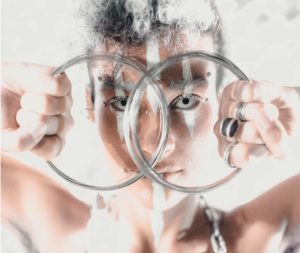
The title “Spricht Dieser Körper Deutsch?” makes reference to the book “Spricht die Subalterne deutsch?” organized by Encarnación Gutiérrez Rodríguez, Hito Steyerl (2003) that traces narratives about post-colonialism and the idea that, even today, theoretical and artistic approaches that come from the history of migration and minority are almost never taken into.
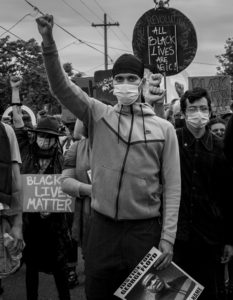
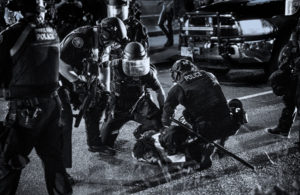
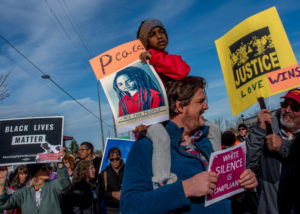
The recent killing of George Floyd on May 29thby a racist white cop sparkedthe largest uprising for racial justice in America. Over 20 million Americans marched in 2000 cities to protest the brutal killings of Floyd, Breonna Taylor and many other black people.
”More”
The media reported that over 17,000 protestors were arrested in the first 2 weeks in June for mainly non-violent actions like curfew violation. Many of the protests lasted for days, even months. Although it took awhile for me to overcome my fear of the corona virus, I was determined to join the protestors out in the streets. I could no longer be a spectator. Resisting in the streets was liberating; it felt like the right thing to do.
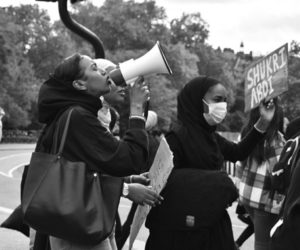
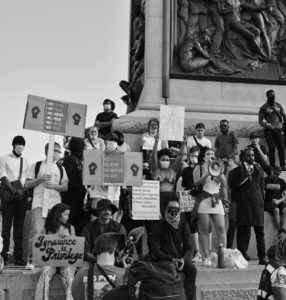
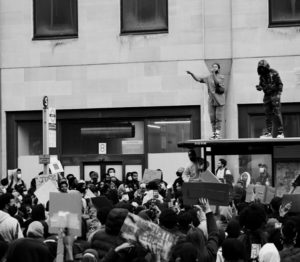
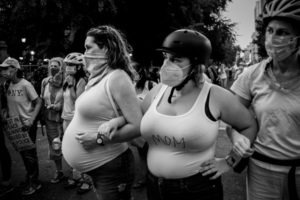
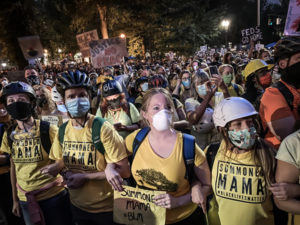
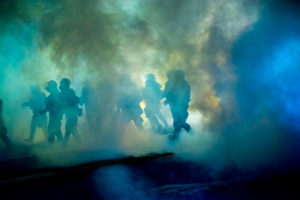
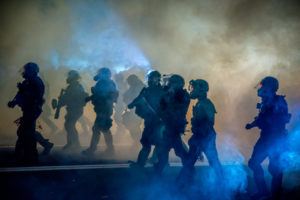
Protesting and photographing out in the streets for Black Lives Matter were incredibly visceral experiences, intense, immediate and dangerous. The police reacted with violence, treating us as the “enemy” rather than civilians with the right to protest, protected by the 1st Amendment. They shot tear gas, pepper spray, rubber bullets and projectiles at us with little or no provocation. They bull rushed and beat us, often without warning.All of us were attacked, “moms and dads,” doctors, nurses, teachers, military veterans, the media, medics, students, workers, anarchists, progressives, young and old. Many of us were afraid, and badly injured, but we kept protesting. Trying to photograph the protests was a real challenge. I quickly discovered that all I had learned about street photography was useless. I relied on my instincts to keep photographing while I was running, my eyes burning with tear gas. The situations were volatile, chaotic and unpredictable. One moment, we were marching peacefully down the streets, shouting “Black Lives Matter.” Moments later,wewere running, screaming, choking and crying while tear gas and flash bang grenades exploded in the streetsIt was terrifying and disorienting. I don’t know how I managed to keep photographing through the thick fogs of tear gas, smokeand stun grenadesin the streets. I guess I was lucky.. I hope my images of the BLM protestshelp to tell our story, our history, our fight for justice. We lit the fire, and we will keep it burning.
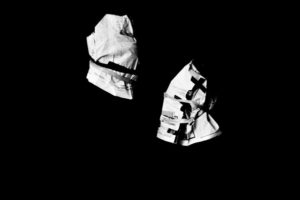
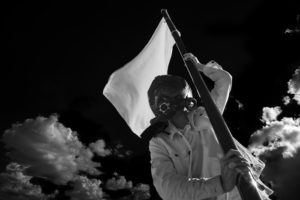
Masks of life This piece showcase the masks that people of color must wear, in order to function under the systemic racism and oppression of society. Covered in black and white hiding every culture and emotions that dont “fit” in the society.
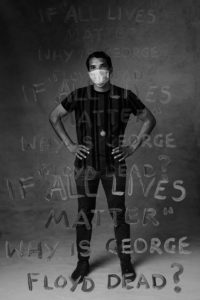
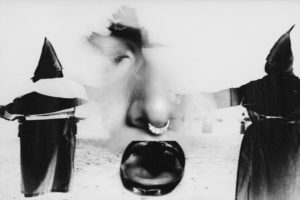
White America I dont think that i have to explain that photo. I think it says it all.
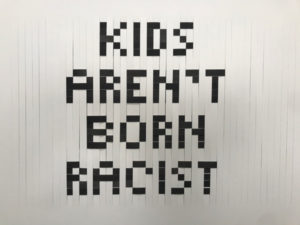
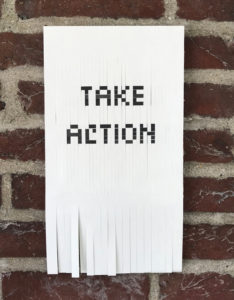
The series INEQUALITY has arised from my interest in ‘the current zeitgeist’, in which race, gender, se xuality and class still are mayor issues. The technique I use is based on the ‘paper waving’ technique which was part of the schooling methods of Friedrich Fröbel, founder of the first ever ‘kindergarten’, in 1837. He believed in divine unity in nature, at which he applied physical training as a fundamental principle.
”More”
According to Fröbel, ‘Paper waving’ was an excellent method to get toddlers acquainted with abstract structures. By applying this technique in this series, the contrast between form and content is strengthened. Fröbel, ‘Paper waving’ was an excellent method to get toddlers acquainted with abstract structures. By applying this technique in this series, the contrast between form and content is strengthened.
Series/ INEQUALITY Image 1 and 2/ Kids aren’t born racist (2020) 5600 x 4200 mm / 1600 gr / Paper on MDF board Form and tekst ask attention for the childlike innocence within the subject ‘equality’.
Image 5 and 6/ Take action (2020) 3400 mm x 1900 mm / 400 gr / paper on cartonboard Form and tekst challenge to take action.
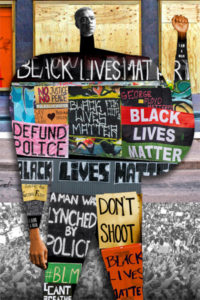
“Oath of dishonor” depicts the Law Enforcement Oath of Honor, spelled out by the names of people of color who have fallen victim to police brutality in the United States. It explores how hollow those honorable words ring, when mourning communities are forced, yet again, to #saytheirname. It provides an ugly glimpse of the systemic oppression of those who are already dealing with plenty of ancestral scars, at the hands of those who are meant to serve and protect. Perhaps even more painful than the stark contrast between words and actions that this piece reflects, is the realization that the names portrayed are merely the tip of the iceberg. This juxtaposition between “what is” and “what should be” visualizes how far we have strayed from the embodiment of those honorable words, or how, perhaps, we were never truly there to begin with.
Simply because Bitcoin is not racist, the technology gives equal opportunity to everyone who lives on the earth, without considering the geographical locations or political situations. It’s the currency for a better future.
Bitcoin is a consensus network that enables a new payment system and a completely digital money. It is the first decentralized peer-to-peer payment network that is powered by its users with no central authority or middlemen. From a user perspective, Bitcoin is pretty much like cash for the Internet. Bitcoin can also be seen as the most prominent triple entry bookkeeping system in existence.
Payment freedom - It is possible to send and receive bitcoins anywhere in the world at any time. No bank holidays. No borders. No bureaucracy. Bitcoin allows its users to be in full control of their money.
Choose your own fees - There is no fee to receive bitcoins, and many wallets let you control how large a fee to pay when spending. Higher fees can encourage faster confirmation of your transactions. Fees are unrelated to the amount transferred, so it's possible to send 100,000 bitcoins for the same fee it costs to send 1 bitcoin. Additionally, merchant processors exist to assist merchants in processing transactions, converting bitcoins to fiat currency and depositing funds directly into merchants' bank accounts daily. As these services are based on Bitcoin, they can be offered for much lower fees than with PayPal or credit card networks.
Fewer risks for merchants - Bitcoin transactions are secure, irreversible, and do not contain customers’ sensitive or personal information. This protects merchants from losses caused by fraud or fraudulent chargebacks, and there is no need for PCI compliance. Merchants can easily expand to new markets where either credit cards are not available or fraud rates are unacceptably high. The net results are lower fees, larger markets, and fewer administrative costs.
Security and control - Bitcoin users are in full control of their transactions; it is impossible for merchants to force unwanted or unnoticed charges as can happen with other payment methods. Bitcoin payments can be made without personal information tied to the transaction. This offers strong protection against identity theft. Bitcoin users can also protect their money with backup and encryption.
Transparent and neutral - All information concerning the Bitcoin money supply itself is readily available on the block chain for anybody to verify and use in real-time. No individual or organization can control or manipulate the Bitcoin protocol because it is cryptographically secure. This allows the core of Bitcoin to be trusted for being completely neutral, transparent and predictable.
Bitcoin is designed to allow its users to send and receive payments with an acceptable level of privacy as well as any other form of money. However, Bitcoin is not anonymous and cannot offer the same level of privacy as cash. The use of Bitcoin leaves extensive public records. Various mechanisms exist to protect users' privacy, and more are in development. However, there is still work to be done before these features are used correctly by most Bitcoin users.
Some concerns have been raised that private transactions could be used for illegal purposes with Bitcoin. However, it is worth noting that Bitcoin will undoubtedly be subjected to similar regulations that are already in place inside existing financial systems. Bitcoin cannot be more anonymous than cash and it is not likely to prevent criminal investigations from being conducted. Additionally, Bitcoin is also designed to prevent a large range of financial crimes.
Bitcoin is the world's first decentralized digital currency. Its value primarily comes from it being the first digital currency that no single person, organization or authority has control over. Anyone can buy it, anyone can receive it — and nobody can tell anyone what they can or cannot do with it.
Bitstamp, Wirex, and Coinbase are just a few of the many services that enable you to convert bitcoins to dollars. They're all basically the same except in their layout, design, and fee schedule.
To buy bitcoin, the first step is to download a bitcoin wallet, which is where your bitcoins will be stored for future spending or trading. Traditional payment methods such as a credit card, bank transfer (ACH), or debit cards will allow you to buy bitcoins on exchanges that you can then send to your wallet.
You can easily trade bitcoin for cash or assets like gold instantly with incredibly low fees. The high liquidity associated with bitcoin makes it a great investment vessel if you're looking for short-term profit. Digital currencies may also be a long-term investment due to their high market demand.Mar 31, 2020.
$25,000/day
Withdrawals of both cryptocurrency and fiat currency are limited. Coinbase Pro account holders have a daily withdrawal limit of $25,000/day. This amount applies across all currencies (for example, you can withdraw up to $25,000 worth of ETH per day).
Bitcoin payments are easier to make than debit or credit card purchases, and can be received without a merchant account. Payments are made from a wallet application, either on your computer or smartphone, by entering the recipient's address, the payment amount, and pressing send. To make it easier to enter a recipient's address, many wallets can obtain the address by scanning a QR code or touching two phones together with NFC technology.
A digital download is a virtual product that you buy. The item is delivered to the customer through a download, saving you the trouble of paying for posting a a real item.
At its most basic, a digital download just means that you click on a link from your computer, and you'll be able to transfer everything from our computers to yours. You don't have to worry about thumb drives, DVDs, or any of that. You'll just click a link, and your media will transfer onto your computer.
Once you have downloaded the file, you can simply print the image on your home printer, upload the file to the printer of your choice or transfer the file to an external drive and take it in to your local printer. All of our files are saved at or under 25MB as most online printers will not accept files larger.
If images are not perfectly sharp and clear, glossy papers can enhance the photos. Landscape and still-life shots come out especially well on glossy paper, as do very colorful portraits. Often used by professionals, matte photo paper is free of shine, resulting in more muted colors.
Matte photos reduce the sharpness of an image, so are not a great choice for high definition photos. Matte finishes tend to require more ink to give your colors good saturation, so they can be more expensive than gloss.
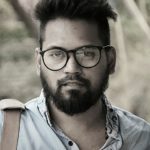
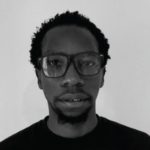
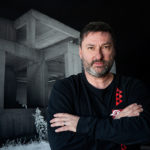
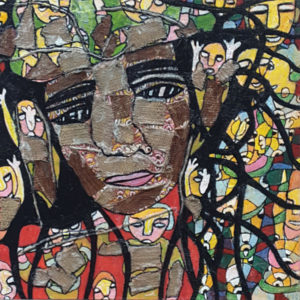
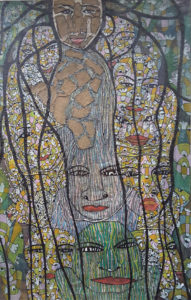
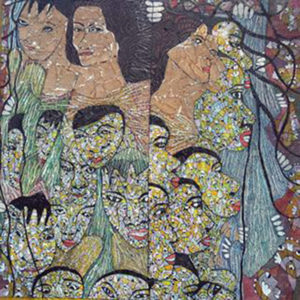
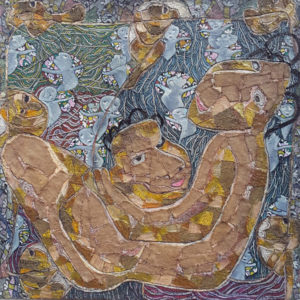
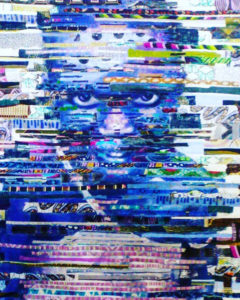
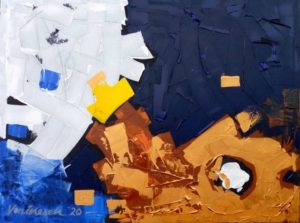
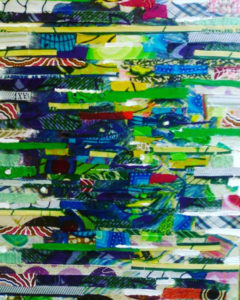
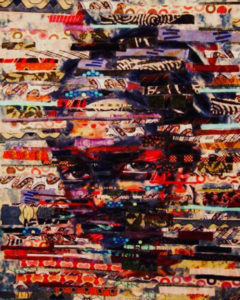
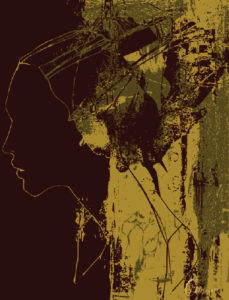
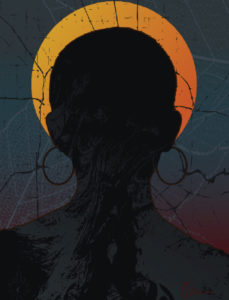

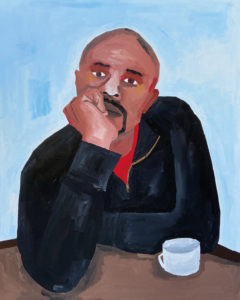
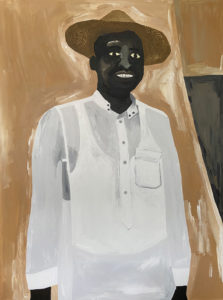

 Ver Ikeseh has over ten years of experience as a practicing visual artist. He earned a Bachelor of Art in Fine Arts from Ahmadu Bello University, Zaria Nigeria. He also has two art related Master Degrees from the University of Ibadan, Ibadan Nigeria and Leiden University, Leiden the Netherlands.
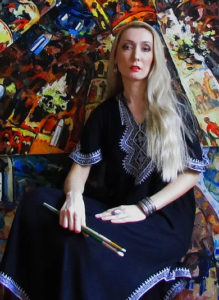 Kate Bortsova is a visual artist who believes: I think that art means confrontation between life and aesthetics. It is a hard struggle for both of them. Ant the understanding of art is one of the main artist’s working specialties.